


Hapalopus formosus (Pumpkin Patch Tarantula) 0.5-0.75"
Pickup available at Home Office
Usually ready in 2-4 days
%200.5-0.75%22)
✅ Covered by our 24 Hr Live Arrival Guarantee!
Description
Hapalopus formosus (Pumpkin Patch Tarantula)
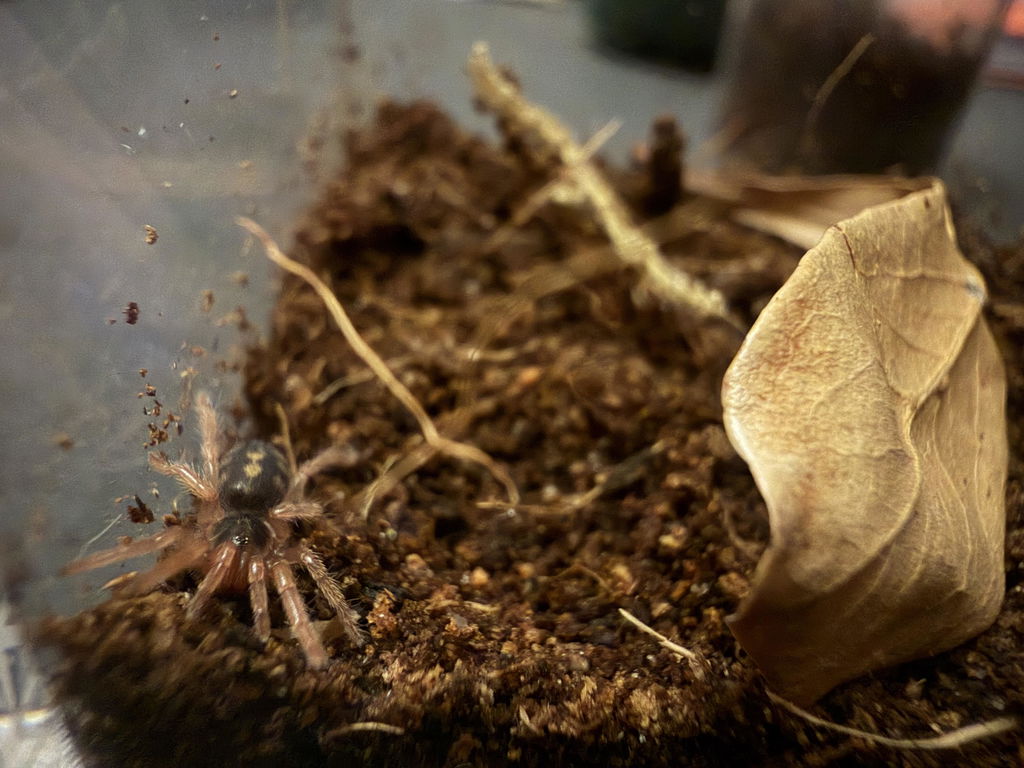
The Pumpkin Patch Tarantula, or Hapalopus formosus (ex Hapalopus sp. Colombia large), is a dwarf terrestrial tarantula from Colombia and one of the most popular dwarf tarantulas in the hobby. Adults of this species have orange legs, a stunning black carapace (head) with reflective orange markings, and an orange abdomen with black markings that create a row of orange dots, leading to its pumpkin patch name. Spiderlings are already colorful, looking like miniature versions of the adults, while the species only grows to about 3.5 inches in diagonal leg span. Dwarf tarantulas are popular among many keepers who want a small tarantula that feels less intimidating than a larger species, and this is a long lived dwarf on top of that, with females reaching about 8 to 10 years while males live 1.5 to 2 years. This species is docile but fast, and one we recommend for keepers who want a small colorful spider that stays out where they can see it. Grab this docile new world tarantula for sale today, offered here as a well started sling.
Why do hobbyists keep Hapalopus formosus?
- Orange And Black Coloration: Orange legs set against a black carapace and abdomen marked with bold orange patterning, a high contrast look that stays vivid rather than washing out with age.
- Colorful Spiderlings: Even from hatchling, this species has a stunning orange and black coloration that intensifies as it ages, so many keepers love raising one from the very start.
- Heavy Webber: Builds dense sheets of webbing across the enclosure, often covering substrate and decor completely, which makes for a genuinely different looking setup.
- Popular Dwarf Species: One of the most popular dwarf tarantulas in the hobby. A small tarantula that feels far less intimidating than a larger species, without giving up any of the color for it.
- Seasonal Favorite: A longtime favorite around Halloween thanks to the jack-o-lantern patterning, which is where the common name comes from. Plenty of people go looking for it as the pumpkin tarantula in October.
How should the Pumpkin Patch Tarantula be kept?
- Adult Size: These hatch out around a third to half an inch (0.33 to 0.5 inch) and reach a max size of about 3.5 inches at full leg span, which is a true dwarf and part of the appeal. That is two enclosure upsizes to plan for across a fast first couple of years.
- Enclosure: This size's spiderling housing is a 4 by 4 by 3 inch enclosure with about 1.25 inches of substrate, a hide such as a piece of cork bark, and anchor points for webbing. On dwarf terrestrials we build to roughly 3 times the leg span for footprint and 2 times for height, and we size for where the animal is headed rather than where it sits today, so this is built for a 1.2 inch spider. Consider sizing up one notch to 5 by 5 by 3 inches for extra room.
- Rehousing: Three enclosures for life, two rehouses total. Next is an 8 by 8 by 5 inch setup with about 2.5 inches of substrate once it passes roughly 1.2 inches, then a 12 by 12 by 8 inch adult enclosure with 3.5 inches of substrate around 2.3 inches. This is a fast growing species, 1 to 2 years to full size, so expect roughly 6 to 8 months out of each enclosure. Males mature much faster than females and often never need the third one.
- Temperature: Keep between 65 and 75 degrees F.
- Humidity: These are moisture sensitive, so keep the substrate damp but not saturated, about the texture and color of coffee grounds. Organic coconut fiber works well because it resists mold and holds that moisture steadily. At this size the substrate drying out completely is the one thing to stay ahead of, so check it rather than trusting a schedule. Good ventilation is critical. Cross ventilation works best, but ample top ventilation can also be effective as long as the enclosure is not over-misted.
- Water: A shallow textured water dish works well, something they can grip when climbing out.
- Diet: Prey length runs about a quarter of the leg span, which is roughly the width of the carapace (head). At half to three quarters of an inch that is a 0.125 to 0.19 inch cricket or a small roach nymph. Crickets, roaches or mealworms all work, and these have a strong feeding response that makes them easy to read. Feed at least once a week.
- Temperament: Docile but fast. These are not a species that sits tucked away, they are out and moving, and that speed is most of why they feel bigger than they are. Work slowly at the enclosure door and they are an easy animal to keep.
Are there any additional notes or considerations for the Pumpkin Patch Tarantula?
- Name Change: This species spent years in the hobby as Hapalopus sp. Colombia large, and plenty of keepers still know it by that name. Hapalopus formosus is the newer name for the same animal, so if you have been looking for a Colombia large, this is it.
- Heavy Webbing: Leave the webbing alone. It is not mess, it is the animal using the enclosure, and clearing it out means they spend the next week rebuilding instead of eating.
- Moisture Sensitive: Consistent damp substrate is the whole formula with this species, and it matters most at spiderling size. Coconut fiber, a water dish, and checking the substrate rather than trusting a schedule covers it.
- Solitary Species: House individually. Attempts at cohabitation can end in cannibalism, so one animal per enclosure.
- Lifespan: Females reach about 8 to 10 years while males live 1.5 to 2 years, which is a long run for a dwarf and worth knowing before you pick a sexed animal.
- Captive Bred: All Tarantulas are 100% captive bred.
Listing Notes
- This listing is for a Hapalopus formosus Pumpkin Patch well started sling measuring around half to three quarters of an inch (0.5 to 0.75 inch) in diagonal leg span, which is the size given in the title, unsexed with roughly a 50/50 chance of male or female. A few molts past hatch size, which puts it through the most delicate stretch of its life already. The pattern is stronger than on a fresh sling and the feeding response is more reliable, so this is the size to take if you want the raising experience with less of the early risk.
FAQ - Frequently Asked Questions
What is the temperament of the Hapalopus formosus?
Hapalopus formosus is generally considered docile but very fast. Rather than displaying defensive behaviors, this dwarf tarantula is more likely to bolt for cover when disturbed. It's an active species that spends much of its time exploring and laying down dense webbing.
Are pumpkin patch tarantulas aggressive?
No. Pumpkin patch tarantulas are not considered aggressive, but they are quick and easily startled. If they feel threatened, their first instinct is usually to run or hide instead of standing their ground. Like most New World tarantulas, they may flick urticating hairs as a defensive measure if repeatedly disturbed.
Are your pumpkin patch tarantulas for sale good for beginners?
Yes, we always recommend our pumpkin patch tarantulas to beginners. "Pumpkin patch" actually refers to two closely related species: Hapalopus formosus (Pumpkin Patch), which reaches about 3.5 inches, and Hapalopus klein (Dwarf Pumpkin Patch), which stays smaller at around 2–2.5 inches. Both stay relatively small, grow quickly, and have straightforward care requirements, making either a great choice for beginners.
Can you hold a pumpkin patch tarantula?
Handling isn't recommended. Although the pumpkin patch tarantula is generally docile, its quick movements make accidental falls or escapes much more likely. Because they're a small terrestrial species, even a short fall can seriously injure the spider.
What is the lifespan of a Hapalopus formosus?
Female Hapalopus formosus typically live 8 to 10 years with proper care, while males have much shorter lifespans and often live only 2 to 4 years after reaching maturity.
What size tank does a pumpkin patch tarantula need?
Because they're a dwarf terrestrial species, pumpkin patch tarantulas only need a habitat with a footprint about three times the tarantula's leg span and a height of about twice its leg span to reduce the risk of injury from falls. Include several inches of substrate for light burrowing, along with cork bark, leaf litter, or other anchor points to encourage the heavy webbing. Explore our tarantula enclosures for sale here.
Loving my new addition! Staff were very helpful with scheduling pickup!
Hi Jill, we're so glad you're happy with your new addition! Thanks for your kind words, and we’re happy we could help. Enjoy your new pet!
Came alive and well!
Hi Gus, we're so glad to hear your Pumpkin Patch Tarantula arrived healthy and thriving! Thanks for sharing your experience.
Super cute and growing fast.
Hi Steve, we're thrilled to hear your Pumpkin Patch Tarantula is growing fast and adorable! Thanks for sharing your experience.
Going to be a fun tarantula. Attacks food voraciously. A bit intimidated by its small size. Hoping it grows fast
Hi Joseph, we're glad to hear your Pumpkin Patch Tarantula is lively and eager to eat! With proper care, it should grow quickly. Thanks for choosing Exotics Unlimited!
Love the pumpkin patch but wish it was at least an inch in size. Can’t wait for it to grow some.
Hi there! We're glad you love the Pumpkin Patch Tarantula. It'll be exciting to watch it grow. Thanks for your support!