



Euathlus truculentus 'Blue' (Chilean Blue Beauty Tarantula) 0.5-0.75”
Pickup available at Home Office
Usually ready in 2-4 days
%200.5-0.75%E2%80%9D)
✅ Covered by our 24 Hr Live Arrival Guarantee!
Description
Euathlus truculentus 'blue' (Chilean Blue Beauty Tarantula)
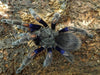
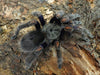
The Chilean Blue Beauty Tarantula, or Euathlus truculentus 'blue', is a terrestrial tarantula from the semi-arid regions of Chile. Adults of this species have gray legs with bright blue-purple femurs and orange knees, a solid gray carapace (head), and a solid gray abdomen. Spiderlings hatch out with a faded pink coloration and a darker abdomen, then gradually become more colorful as they grow into the full adult coloration, while the species only grows to about 5 to 6 inches in diagonal leg span. Like others in the genus, this species has a very long lifespan, with females reaching about 20 to 30 years while males live 5 or more years. This species is also very calm and forgiving, and one we recommend for beginner keepers or anyone who wants an easier keeping experience. Grab this docile new world tarantula for sale today, offered here as a spiderling.
Why do hobbyists keep Chilean Blue Beauty Tarantula?
- Distinctive Coloration: A beautiful gray coloration accented with blue purple femurs and orange knees is a really unique color combination in the hobby.
- Docile Temperament: This is a calm, slow moving species that tolerates the occasional off day in husbandry without any drama, making it an easy one to live with.
- Great Display Species: Being calm and slow moving, this is an easy species to actually watch out in the open rather than one that bolts for cover the moment you approach the enclosure.
- Beginner Species: The combination of a docile nature and forgiving care makes this a strong pick for someone still learning how to keep tarantulas.
- Rare in the Hobby: This is a harder species to source than most of its Euathlus relatives, so adding one to a collection is a genuine find.
How should Euathlus truculentus 'blue' be kept?
- Adult Size: This species hatches at around 0.5 to 0.75 inch and reaches an adult max of about 5 to 6 inches, so expect several rehouses along the way as it grows into that full size.
- Enclosure: At this size, a footprint of about 6 by 6 inches with around 4 inches of height works well, with roughly 1.5 inches of substrate. This species burrows and digs, so the enclosure is sized a notch ahead of the animal rather than snug to its current size.
- Setup Tips: Always include a rock or piece of bark large enough to fully hide under. In the wild this species spends the day tucked under cover like this, coming out mainly in the mornings, and the hide also gives it a spot to retreat to for extra humidity if it wants it. If a spiderling is seen tucked tightly into a corner, that is usually a sign the enclosure is running a little too humid rather than too dry.
- Rehousing: From here, expect to size up to about 12 by 12 by 8 inches and then about 18 by 18 by 12 inches as it grows, each stage lasting roughly 18 to 24 months at this species' slow growth rate.
- Temperature: Keep them between 65 to 75 degrees Fahrenheit, the optimal range for most highland species like this one. Cooler temperatures are survivable, but increase the odds of trouble molting and growing, so we recommend staying in this range for the best results. Most keepers do not need any extra heating to hit it.
- Humidity: This species comes from the semi-arid regions of Chile, where mornings bring natural condensation that dries off as the day warms. We recommend a light misting about once a week. The top of the substrate can dry out between mistings, but the substrate underneath should never be allowed to dry out completely, matching the surface dry, soil damp balance this species is used to in the wild. The hide (see Setup Tips) gives it a spot to retreat back down to that moisture whenever it wants it.
- Water: A shallow textured water dish works well, something they can grip when climbing out.
- Diet: At this size, offer prey around 1/8" (roughly the size of the carapace), at least once a week. This species does not eat much and may go a week or more, sometimes closer to a month, between meals, so a slower feeding pace is normal rather than a cause for concern. Overfeeding is the bigger risk, since uneaten prey left in a humid enclosure is what leads to mold.
- Temperament: This is a calm, forgiving species that tolerates the occasional off day in husbandry without any drama, making it an easy one to live with at every size.
Are there any additional notes or considerations for Euathlus truculentus 'blue'?
- Health Check: Because this species eats infrequently, the abdomen is a better health check than counting feedings. A healthy abdomen sits as wide as, or wider than, the carapace. One that is noticeably thinner than the carapace is the one sign actually worth watching for.
Listing Notes
- This listing is for a Euathlus truculentus 'blue' Chilean Blue Beauty Tarantula spiderling measuring around 0.5 to 0.75 inches in diagonal leg span, which is the size given in the title, unsexed, with roughly a 50/50 chance of male or female.
- At this size the gray and blue-purple coloration is still coming in -- that is the point, since this species starts out with a faded pink coloration and a darker abdomen, and you get to watch it intensify into the full adult look as it grows.
- Looking for other sizes? This species is also available as 1-1.5" juvenile and 2" mature female.