


Avicularia avicularia (Guyana Pink Toe Tarantula) 0.75-1"
Pickup currently unavailable at Home Office
%200.75-1%22)
✅ Covered by our 24 Hr Live Arrival Guarantee!
Description
Avicularia avicularia (Guyana Pink Toe Tarantula)
The Guyana Pink Toe Tarantula, or Avicularia avicularia, is an arboreal tarantula found across a huge range through northern South America and Trinidad. Adults have dark velvety legs finished with pink toe tips, a dark carapace (head) and a dark abdomen, the pink toe tips being where the whole pink toe group gets its name. Spiderlings start out with a blue toned body, and the dark adult coloration and the pink toe tips come in a little more with every molt. The species only grows to about 5 inches in diagonal leg span, while females live about 10 to 12 years and males mature faster, typically living only 2 to 3 years. This species is also docile but fast, quick to retreat rather than posture, and it is the animal most keepers picture when they hear the words pink toe. A captive bred new world tarantula for sale from a trusted breeder, offered here as a spiderling.
Why do hobbyists keep Guyana Pink Toe Tarantula?
- Stunning Coloration: A dark velvety body with pink toe tips on every leg. This is the original, and the reason an entire group of tarantulas carries the pink toe name.
- Colorful Spiderlings: Slings come in with a blue toned body that darkens with every molt while the pink toe tips come up, so the animal changes steadily rather than all at once.
- Heavy Webber: Tubes off high on cork bark and keeps building, so a tall enclosure furnishes itself over the first few months.
- Docile Temperament: Fast but genuinely calm, quick to duck back into its retreat rather than square up, which is why this one has been a first arboreal for so many keepers.
- Hobby Favorite: Known across the hobby as the avic avic tarantula, usually the first hit when someone searches a pinktoe tarantula for sale, and one of the first names any keeper learns in the group.
How should Avicularia avicularia be kept?
- Adult Size: Guyana Pink Toe Tarantula spiderlings hatch around 0.5 to 0.75 inch and grow to about 5 inches in diagonal leg span as full adults, so every enclosure below is sized ahead of where this animal is today, not just to fit it right now.
- Enclosure: At 0.75 to 1 inches, this arboreal tarantula cage runs 4x4x5 inches, with at least 1.5 inches of substrate and a real piece of cork bark or sterile wood to start webbing against right away. Sized a notch ahead of the animal on purpose, since a pink toe that grows into its space settles and webs faster than one that outgrows it and has to be moved again right away.
- Setup Tips: Real cork bark or a real piece of wood in the enclosure is not just decoration, it is one of the most important pieces of this setup. It gives the animal somewhere real to grip and start laying web right away, and with this genus in particular, that first piece of bark makes a drastic difference in how quickly a new arrival settles in and starts webbing. We have seen a real increase in early survival success tied directly to a bark based setup versus a bare enclosure, so this is one detail worth getting right from day one, not something to add later.
- Rehousing: From here it moves up to an 8x8x10 inch enclosure, then finally a 10x10x16 inch enclosure as a full adult, with each move coming roughly 8 to 12 months apart at this genus's medium to fast growth rate, full size in about 2 to 4 years start to finish.
- Temperature: 75 to 85°F, the optimal range for most tropical species like this one. Cooler temperatures are survivable, but increase the odds of trouble molting and growing, so we recommend staying in this range for the best results. Most keepers do not need any extra heating to hit it.
- Humidity: Moderate to high, with the substrate kept lightly moist rather than wet, and strong cross ventilation. Airflow matters more here than maximizing humidity, so skip a fully screened top, which dries an enclosure out too fast.
- Water: In the wild, arboreal tarantulas get most of their water from rainfall, drinking droplets off leaves, webbing, and enclosure walls rather than standing water. Misting the enclosure once a week is required, not optional, since it's this species' primary water source. A shallow water dish placed up on a piece of cork rather than on the floor is still worth keeping as a backup, and keeps crickets from drowning before they get eaten, but it should never replace regular misting.
- Diet: Prey sized around 3/16", the right size for a 0.75 to 1 inches animal, offered at least once a week. Feed on that schedule at every stage, spiderlings included, and remove anything left uneaten after a day or two.
- Temperament: Docile but fast, quicker to bolt for its retreat than to stand its ground, and capable of jumping when startled. It tends to stay high in the enclosure and may ignore prey sitting on the ground while young, so offering food up where it is sitting works better than dropping it below. This genus is genuinely easy once one thing is right: keep the air moving with real cross ventilation, keep the substrate lightly moist rather than wet, and give it real cork bark from the sling stage. Get that airflow right and this species is straightforward to raise.
Are there any additional notes or considerations?
- Pink Toe Spiders?: You will sometimes see these called pink toe spiders online. Tarantulas are arachnids, not spiders, and definitely not true spiders, the kind most people picture when they hear the word spider. This is one of the heavy bodied, hairy, long lived tarantulas that gets lumped in with that name anyway. If you searched for a pink toe spider and landed here, you are in exactly the right place.
- A Tautonym in the Wild: Avicularia avicularia is one of the few tarantulas where the species name repeats the genus name exactly, sometimes called a tautonym in taxonomy. Search engines and hobbyists alike often just write out the full Avicularia avicularia pink toe tarantula name for clarity, since "avicularia" alone could mean the genus or this specific species.
- Not Eating? If this tarantula ever skips a meal, try prekilling the prey item and placing it up high in the enclosure rather than leaving live prey to wander. Dehydration is one of the most common reasons any tarantula, arboreal species especially, will refuse food, so keeping up with misting and a full water dish is usually the fastest way to get it back on track.
Looking for similar species?
- Browse our Arboreal Tarantulas and New World Tarantulas collections to explore related care profiles.
Frequently asked questions about Guyana Pink Toe Tarantula?
- What do I do when I first get my tarantula? As soon as it arrives, mist the enclosure so there is clear moisture on the webbing, substrate, or enclosure wall, and keep an eye on it until you actually see it take a drink. Shipping is dehydrating, and an arboreal especially will not settle in or start eating until it has rehydrated properly, so this is the one step worth not skipping on day one. Once you have seen it drink, let it settle in undisturbed for a few days before offering its first meal.
Listing Notes
- This listing is for an Avicularia avicularia Guyana Pink Toe Tarantula spiderling measuring around three quarters to one inch (0.75 to 1 inches) in diagonal leg span, which is the size given in the title, unsexed, with roughly a 50/50 chance of male or female. The same price as our smaller spiderling size, just a step further along, with more growth already behind it heading toward that first rehouse.
- Looking for a different size? Check out these other options: 0.5-0.75", Spiderling, 1-1.25", Juvenile, and 2.5-3", Juvenile.
Very active, has successfully eaten and built a web tunnel!
Currently named Bret Hart.
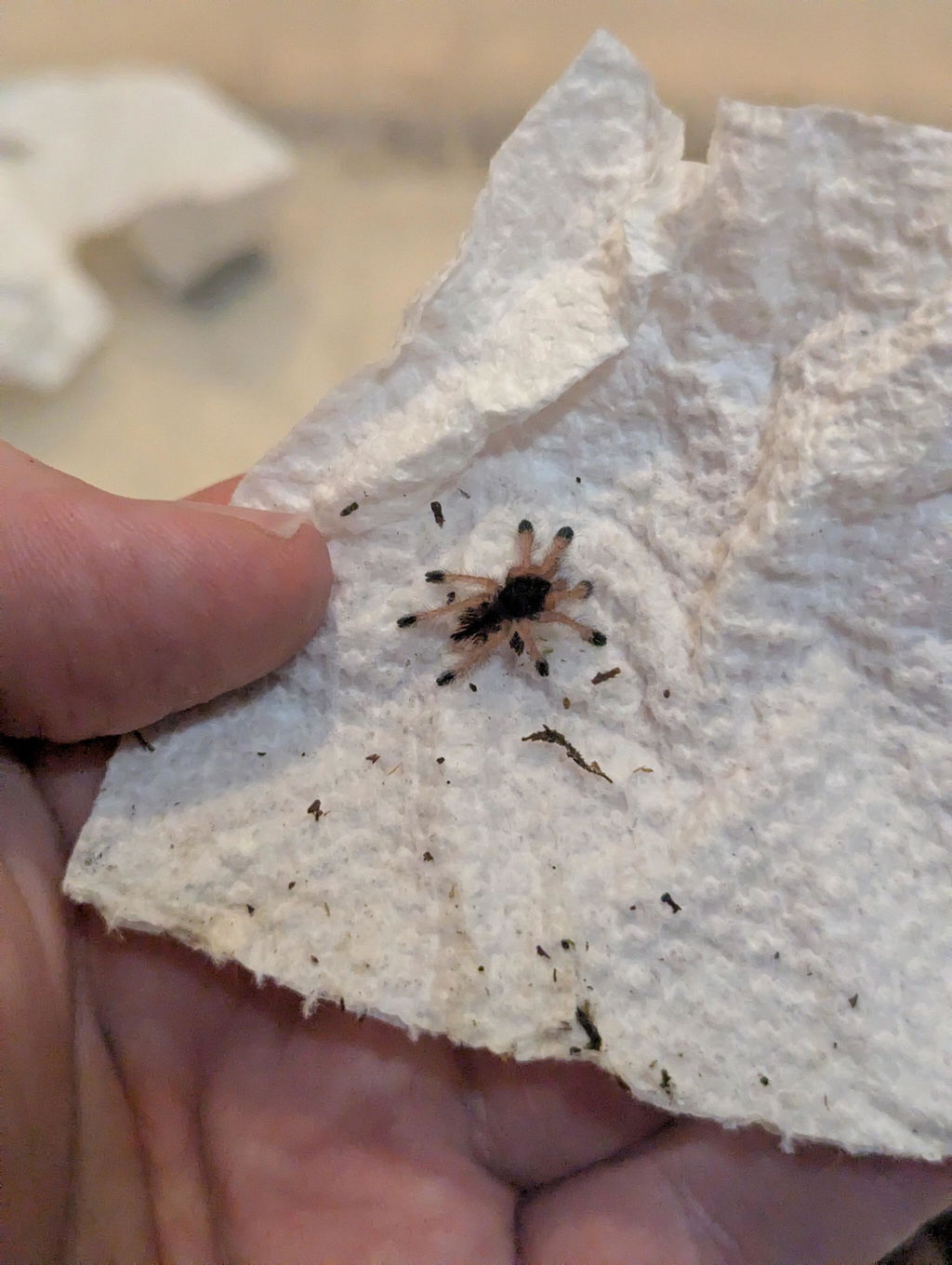
Bret Hart is off to a strong start! Eating well and already building a web tunnel means he's settling in just the way we'd hope. Also, great name choice, thanks for sharing the update.
Love all my pink toes very healthy very beautiful
Healthy, lively and already ate. It has a good appetite.
This one came a little small kinda concerned for it this one didn’t like or want to be handled I placed it in a enclosure I set up and I don’t know why but all the isopods died and it fell and was looking unpromising so I emergency removed her and placed it in a different environment got them fresh misted water and feeders and left them alone or quarantine last few days and it’s eaten it’s webbed up and it’s responded are agile and alert but not as flighty as it was the first few days