


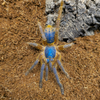


Ornithoctoninae sp. Hon-sej (Blue Blaze Tarantula)
$450.00
/
Sold out
Shipping calculated at checkout.
Pickup currently unavailable at Home Office
)
Description
Ornithoctoninae sp. Hon-sej (Blue Blaze Tarantula)
The Blue Blaze is one of the most striking old world dwarves in the hobby, a fossorial species out of Vietnam carrying deep orange paired with vivid blue across the carapace and abdomen. That blue intensifies noticeably with every molt, building from a hint at the juvenile stage into a fully saturated adult pattern. This is a captive bred old world tarantula for sale that stands out even among a hobby full of colorful species.
Why do hobbyists keep Ornithoctoninae sp. Hon-sej?
- Stunning Coloration: Deep orange paired with vivid blue across the carapace and abdomen, a combination that intensifies noticeably as the animal matures.
- Great Display Species: Unlike a lot of fossorial species that disappear into a burrow and stay there, we have seen holdback specimens roam a good distance from the entrance chasing prey, so there is real visibility with this one.
- Sexual Dimorphism: Females hold this coloration for life, while males carry it through their growing years and lose it on their final molt, a color story that runs through the whole life of the species.
- Rare in the Hobby: First arriving in the US around 2018 and still building its footing, we have personally worked with this species and its relatives longer than any other dealer we know of.
How should Ornithoctoninae sp. Hon-sej be kept?
- Adult Size: Reaches about 3.5 inches at full leg span, making this one of the more compact old world species in the hobby, with plenty of presence for its size.
- Enclosure: A fossorial setup with deep, secure substrate is essential. Size the enclosure and substrate depth to the animal's current leg span as it grows, always giving it enough room to dig proper, stable burrows without being lost in too much open space.
- Temperature: 75-82°F, on the warmer end to reflect this species' tropical Vietnamese origin.
- Humidity: Moderate to high. Keep the lower substrate layers slightly damp while allowing the top to dry out between waterings, never swampy.
- Water: Provide a water dish near the burrow entrance. Fossorial species benefit from ambient moisture and will use a dish placed at substrate level.
- Diet: Prey sized to about a quarter of the leg span, matching the width of the carapace (head). Crickets or dubia roach nymphs work well. Feed at least once a week.
- Temperament: Fast and alert like most old world species, and it carries a medically significant bite, so this is a display only animal. We do not encourage or recommend handling with any of our tarantulas, old world species especially. Give it a calm, low disturbance setup and it is a phenomenal animal to watch.
Are there any additional notes or considerations?
- Active Burrower: This species digs multiple burrows, but do not expect a reclusive animal, we have watched holdbacks range well away from the entrance to run down prey.
- Early Hobby Species: This species was doubted as fabricated or over edited photos when it first showed up in the US hobby around 2018. We can personally attest it is very real, and we have direct experience with all four known species in this genus.
- Molt Timing: In our own multi generation experience, males take roughly 2.5 years to mature, sometimes faster with more consistent feeding, and lose their color on that final molt.
- Captive Bred: All Tarantulas are 100% captive bred.
Have a question? Ask an expert!
Share information about your brand with your customers. Describe a product, make announcements, or welcome customers to your store.