


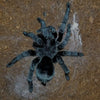

Grammostola pulchra (Brazilian Black Tarantula) 1-1.25"
Pickup available at Home Office
Usually ready in 2-4 days
%201-1.25%22)
✅ Covered by our 24 Hr Live Arrival Guarantee!
Description
Grammostola pulchra (Brazilian Black Tarantula) 1-1.25"
The Brazilian Black Tarantula, or Grammostola pulchra (G. pulchra), is a terrestrial tarantula from Brazil. Adults have velvety jet black legs, carapace (head) and abdomen, one solid color from end to end, which is where the Brazilian Black name comes from. Spiderlings start out with reddish brown legs and carapace set against a black abdomen, darkening with every molt until that jet black comes in around two and a half inches, while the species only grows to about 6 inches in diagonal leg span. Like others in the genus, this species is very long lived, with females reaching about 20 to 30 years and males 3 to 5. This species is also very calm and slow moving, known in the hobby as the Black Lab of tarantulas, and one we recommend for beginner keepers or anyone who wants an easier keeping experience. Grab this docile new world tarantula for sale today, offered here as a juvenile.
Why do hobbyists keep Grammostola pulchra?
- Velvety Jet Black Coloration: A solid velvety jet black from the legs through the carapace to the abdomen, holding that single color across the whole animal.
- Great Beginner Species: Forgiving enough that a slip in temperature, feeding or humidity is unlikely to cost you the animal, which is exactly what you want while you are still learning how to keep spiderlings and tarantulas.
- Docile Temperament: Very calm and slow moving, deliberate rather than quick to bolt, which is how it earned the Black Lab nickname in the first place.
- Great Display Species: Constantly rearranges its own enclosure, shifting decor and even the water dish around with its fangs until the setup suits it, so there is usually something to see.
- Long Lived: Females reach about 20 to 30 years and males 3 to 5, so both sexes run long for a tarantula rather than just the females.
How should the Brazilian Black Tarantula be kept?
- Adult Size: Spiderlings start out around half to three quarters of an inch (0.5 to 0.75 inch) in diagonal leg span, growing to an adult max of about 6 inches, a genuinely substantial tarantula that never becomes difficult to house.
- Enclosure: At this size, house in roughly a 6 by 6 by 4 inch enclosure with about 2 inches of substrate, a hide, and a shallow water dish, sized ahead of the animal rather than to its current size.
- Rehousing: Two rehouses ahead, up to roughly 12 by 12 by 8 inches and then the 18 by 18 by 12 inch adult enclosure. On a slow grower each one lasts about 18 months to 2 years, so expect 4 to 6 years to full size. Males often mature before ever needing that third cage.
- Temperature: Hold steady between 65 and 75 degrees Fahrenheit. This species sees a genuinely cold season in the wild, so the cooler end of that range is comfortable rather than just tolerable, which makes it easy to keep in a normal room without heating equipment.
- Humidity: Water it and let it dry rather than keeping it damp. This is a semi-arid species, which in practice means substrate that dries out within about a day after you add moisture, never sitting soaking. Tropical species can stay damp much longer than this one will thank you for. Good ventilation is critical. Cross ventilation works best, but ample top ventilation can also be effective as long as the enclosure is not over-misted.
- Water: A shallow textured water dish works well, something they can grip when climbing out.
- Diet: Feeding at least once a week keeps this species growing as well as a slow grower can. At this size, prey should run about a quarter to five sixteenths of an inch (0.25 to 0.3125 inch).
- Temperament: Very docile and slow moving, deliberate rather than quick to bolt or dart for cover, and forgiving of the small husbandry mistakes every keeper makes early on.
Are there any additional notes or considerations for the Brazilian Black Tarantula?
- Sling Coloration: Spiderlings have reddish brown legs and a reddish brown carapace against a black abdomen, and they darken with every molt until the whole animal is jet black at around 2.5 inches.
- Enclosure Rearranging: We have watched these constantly rearrange their enclosures, moving heavy decor and even water dishes around with their fangs until the setup suits them, a behavior we see in their close relatives too.
- Slow And Steady: This is a slow growing species, taking about 4 to 6 years to reach full size, which means a spiderling is a long project and an adult female is worth what it costs.
- Captive Bred: All Tarantulas are 100% captive bred.
Listing Notes
- This listing is for a Grammostola pulchra Brazilian Black Tarantula juvenile measuring around one to one and a quarter inches (1 to 1.25 inch) in diagonal leg span, unsexed with roughly a 50/50 chance of male or female. At this size it is past the spiderling stage and easier to feed and house day to day, while the jet black is still ahead of you. Looking for other sizes? This species is also available as a 0.5 to 0.75 inch Spiderling, 0.75 to 1 inch Well-Started Sling, 2 to 2.5 inch Juvenile, 2.5 to 3 inch Juvenile Female, 4 inch Sub-Adult Male, 4 to 4.5 inch Sub-Adult Female, or 5.5 to 6 inch Adult Female.