


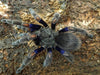
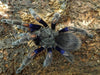


Euathlus truculentus 'blue' (Chilean Blue Beauty Tarantula)
Shipping calculated at checkout.
Pickup available at Home Office
Usually ready in 2-4 days
Only 8 left
)
Description
Euathlus truculentus 'blue' (Chilean Blue Beauty Tarantula)
The Chilean Blue Beauty is a high elevation species out of the mountains of Chile, and it is one of the more understated stunners in the hobby. Bright purple femurs and orange knees stand out against dark legs, a color combo that only gets richer with age. Grab this new world tarantula for sale today if you want a calm, long lived species with color that photos never quite do justice.
Why do hobbyists keep Euathlus truculentus 'blue'?
- Stunning Coloration: Bright purple femurs and orange knees against dark legs make this one of the most distinctive color combinations in any new world terrestrial.
- Docile Temperament: Calm and slow moving, this species tolerates disturbance and handling of its enclosure far better than most, rarely bolting or standing its ground.
- Great Display Species: Curious and often out in the open rather than tucked into a hide, giving keepers plenty of chances to actually see it.
- Rare in the Hobby: A painfully slow grower that has kept it from becoming a hobby staple, which makes a mature specimen a real prize for patient keepers.
How should Euathlus truculentus 'blue' be kept?
- Adult Size: Reaches about 5.5 to 6 inches at full leg span, a respectable size that still stays manageable for most keepers.
- Enclosure: Provide an enclosure roughly 3 times the leg span in footprint and 2 times in height, with substrate about equal to the leg span in depth and a hide included. At full adult size that works out to about 18 by 18 inches of footprint, 12 inches of height, and 6 inches of substrate. Scale everything down proportionally while it is still growing into that size.
- Temperature: 65-75°F, no extra heating needed for most homes.
- Humidity: Keep a moisture gradient rather than uniform dampness. A slightly damp lower substrate layer with a drier surface mimics the high elevation, morning dew cycle this species comes from. It self regulates well and does not need much intervention.
- Water: A shallow textured water dish works well, something they can grip when climbing out.
- Diet: Crickets, roaches, and similar feeders sized to about a quarter of the leg span, matching the width of the carapace (head). At full adult size that is roughly a 1 to 1.5 inch cricket. Feed at least once a week.
- Temperament: Hardy and unbothered by dry spells or temperature swings thanks to its high elevation origin. One of the calmest new world species available, making it a great pick for keepers who want a low stress animal to observe.
Are there any additional notes or considerations?
- Slow Grower: This species takes its time reaching full size, so think of it as a long term project rather than a quick payoff. The wait is part of what makes an adult so special to own.
- High Elevation Origin: Native to the mountainous deserts of Chile, which is exactly why it handles temperature swings and dry conditions so well in captivity.
- Captive Bred: All Tarantulas are 100% captive bred.
Have a question? Ask an expert!
Share information about your brand with your customers. Describe a product, make announcements, or welcome customers to your store.